Common questions
My AC runs but will not cool the house. What are the usual causes in Leander?
In order of how often they are found: a clogged filter or blocked airflow, a failed capacitor or fan component, low refrigerant from a leak (refrigerant is not consumed; low means leaking), a frozen coil from any of the above, and duct failures dumping cooled air into the attic. Runtimes of many hours without reaching the set point are the classic forum complaint and they sort into the same list. Turn a frozen system off and run the fan to thaw it, and never approve a refrigerant recharge without a leak search; topping off a leaking system is a subscription, not a repair.
My furnace clicks but will not start. What is failing?
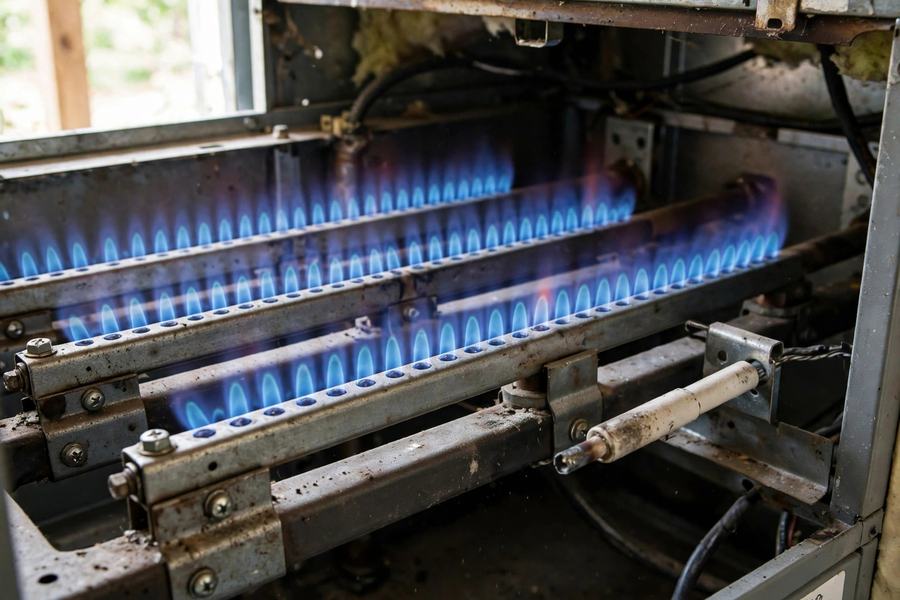
The furnace starts in a sequence, and clicking without heat means one step failed: the inducer proves the vent, the igniter glows or sparks, the gas valve opens, and the flame sensor proves flame. A sensor filmed with oxide, a cracked igniter, and a failing inducer motor are the common findings, roughly in that order, and each is a part level repair. What it is not, usually, is the thermostat. If you smell gas at any point, stop: leave, and call the gas utility or emergency services before any repair call.
Repair or replace: my system is 15 years old. How do I decide?
Use the arithmetic the trade uses: multiply the repair quote by the system's age in years. Past roughly 5,000, replacement usually wins; well under, repair usually wins. A $400 repair on a 15 year old system (6,000) sits on the line; a $1,800 compressor on the same system (27,000) is well past it. Add the condition evidence: refrigerant type on older cooling systems, duct condition, and whether this is the first major repair or the third. Any company should show you both prices in writing; a replacement pitch without a repair price is a sales call, not a diagnosis.
How much does a new HVAC system cost in Leander?
Published national guides put full system replacement commonly between $5,000 and $12,500 or more installed, with size, efficiency tier, fuel type, and duct work deciding where a house lands. Single component repairs run $150 to $650 for most findings, and a diagnosis visit runs $75 to $200. The honest quote separates equipment, duct corrections, and electrical or venting changes into lines, because the duct line is where replacement quotes quietly differ by thousands between companies measuring the same house.
There is ice on my AC line and the coil looks frozen. What now?
Turn the cooling off and run the indoor fan. A frozen coil is a symptom, usually of low airflow (filter, blower, closed or blocked vents) or low refrigerant from a leak, and running the system frozen risks the compressor, the most expensive part in the system. Let it thaw fully (hours, not minutes) before a technician tests it, because readings on a frozen coil lie. Do not chip the ice. If it freezes again after a filter change, the cause is refrigerant side or blower side, and that is a diagnosis visit, not another thaw.
How often should HVAC be serviced, and when?
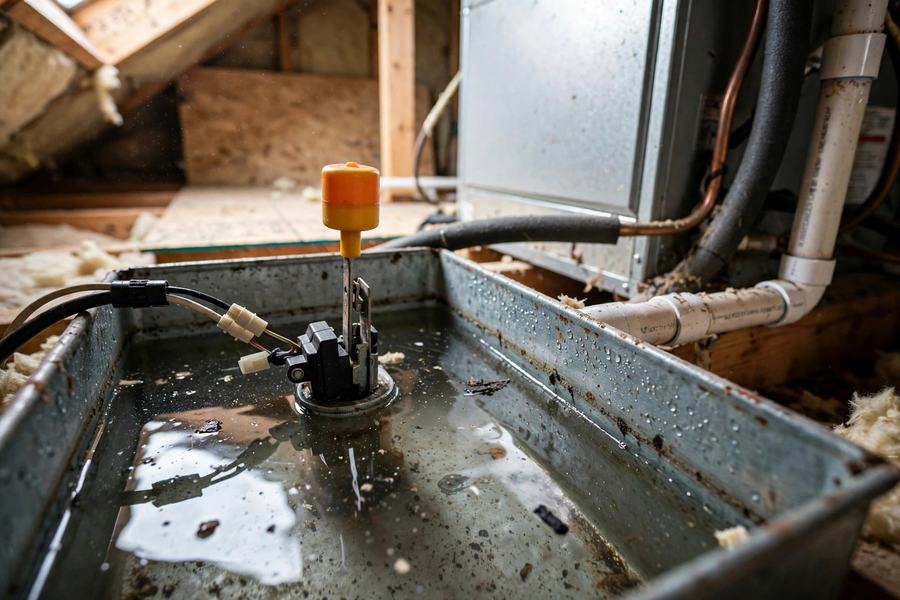
Once a year per function: cooling before the heat season, heating before the cold season, which for most homes means one or two visits a year. The work that matters is unglamorous: coils cleaned, the condensate drain flushed (its failure is the one that floods ceilings), electrical components tested against readings, and safety controls proven on heating equipment. Shoulder season scheduling is the practical advice: the same visit in the first heat wave joins a queue of people whose systems already failed.
Does homeowners insurance cover HVAC damage in Leander?
Only when a covered event causes it. Wear, age, and mechanical failure are maintenance and are not covered anywhere. Lightning strikes and power surge damage from a storm event, and fire or storm damage to equipment, are the covered kind, subject to your deductible, and they need documentation: the storm date, the surge evidence, and a technician's finding that ties the failure to the event. A compressor that dies of age in the same week as a storm is still age unless the electrical evidence says otherwise, which is why the diagnosis report matters.
My heat pump blows air that feels cold in heat mode. Is it broken?
Probably not on that evidence alone. Heat pumps deliver air at roughly 90 to 100 degrees, below skin temperature, so it feels cool on your hand while still heating the house; a furnace delivers noticeably hotter air in shorter bursts. The real tests are whether the house holds its set point, whether ice on the outdoor unit clears in defrost, and whether auxiliary heat is running constantly (the electric bill notices that one). If the house drifts colder while the unit runs, or the unit stays iced, that is a service call with a real fault behind it.
See all questions →
Local guides